You can tell when a fragrance is wearing the weather rather than you. A dense oud that felt magnetic in January can turn airless on a humid July afternoon, while a sheer neroli that sparkles in spring may disappear entirely against wool, cold air and a long evening out. A guide to seasonal scent rotation is less about rules than about knowing when a perfume is in its best light.
For anyone building a more thoughtful fragrance wardrobe, seasonal rotation offers something useful and rather elegant. It helps each scent feel more distinctive, extends how wearable your collection is, and stops beautiful bottles from competing for the same mood, outfit and occasion. Most importantly, it sharpens your taste. You begin to notice not just what you like, but when you like it most.
Why a guide to seasonal scent rotation matters
Perfume does not exist in a vacuum. Temperature, humidity, fabric, skin chemistry and even pace of life change how a composition moves. Cold weather tends to mute projection at first, then hold onto richer materials for longer. Heat pushes fragrance outward, amplifying sweetness, musk and spice, sometimes to a point that feels excessive.
That is why seasonal scent rotation is not simply a collector's ritual. It is a practical way to make fragrance perform better. Amber, vanilla, resin, leather and woods often feel composed and enveloping in autumn and winter. In spring and summer, citrus, green notes, tea, transparent florals and lighter musks tend to read with more clarity and ease.
There are, of course, exceptions. Some tropical florals bloom beautifully in heat, and some airy iris or incense fragrances are astonishing in the cold. The point is not to divide perfumes into rigid seasonal boxes. The point is to understand context.
Start with climate, not the calendar
The cleanest way to approach a guide to seasonal scent rotation is to ignore fixed dates and pay attention to conditions. Early spring in Manchester does not behave like late spring in Barcelona. A fragrance wardrobe that works across Europe needs flexibility.
Think in terms of temperature and texture. When the air is crisp, skin is covered, and evenings start earlier, perfume can carry more depth. This is the natural territory of woods, spice, balsams, smoke and plush florals. When the air is bright, warm or humid, most people want lift rather than density. Citrus, fig leaf, aromatic herbs, watery florals and soft skin scents tend to feel more refined.
If your routine moves between climates, seasonal rotation can be even more useful. The fragrance you wear to a cool office in February may not suit a weekend city break in Lisbon. Rather than searching for one all-purpose bottle, it is usually more satisfying to build a small edit that responds to where and how you live.
How to organise your fragrance wardrobe by season
A polished fragrance wardrobe does not need to be large. Four to eight perfumes, chosen with intention, can cover most scenarios beautifully. The trick is to think in families and functions rather than in sheer quantity.
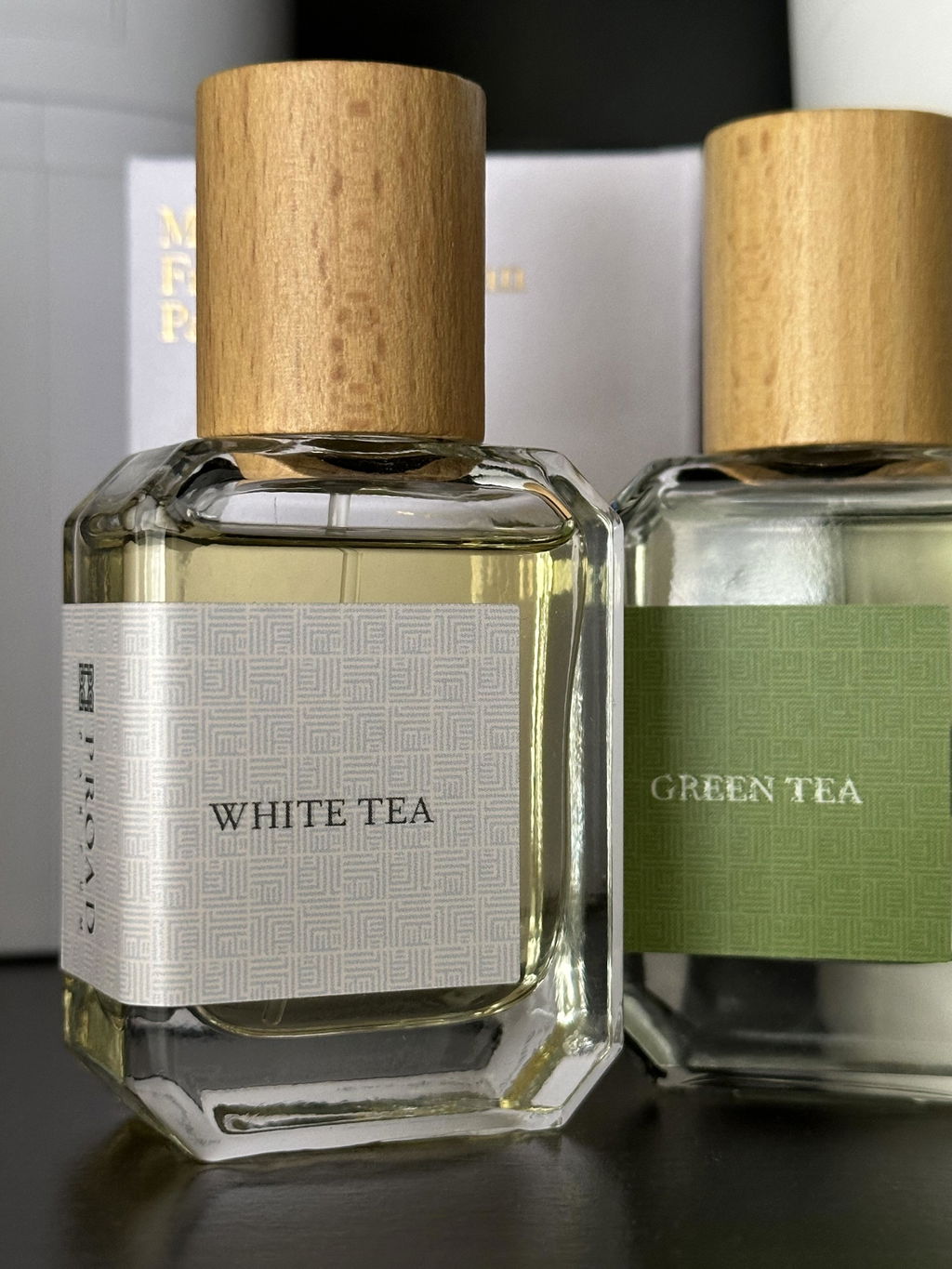
For spring, look for scents with movement - green stems, delicate florals, rain-washed musks, tea, pear, soft citrus, perhaps a transparent woods base. These fragrances feel crisp without being austere. They suit the in-between quality of the season, when sunshine is welcome but the air still holds a chill.
Summer usually benefits from restraint. This does not mean blandness. It means compositions that breathe. Citrus, neroli, bergamot, marine nuances, coconut in moderation, airy jasmine, salt, herbs and white musks tend to sit well in heat. If you enjoy sweetness, keep an eye on texture. Sorbet-like fruit or luminous florals often feel more polished than syrupy gourmand notes in high temperatures.
Autumn invites contrast. The air cools, fabrics become heavier, and fragrance can move from bright to textured. This is often where fig turns creamier, rose becomes more velvety, spice feels more tailored, and woods start to come into focus. Autumn scents do not need the full weight of winter, but they should have shape.
Winter is where density earns its place. Amber, incense, patchouli, leather, oud, cacao, tobacco, sandalwood and richer vanilla accords often come alive here. A perfume with gravity can feel exquisite against cashmere, eveningwear and cold air. Even then, balance matters. A winter fragrance should feel enveloping, not oppressive.
Notes to look for - and notes to treat carefully
Fragrance notes are not strict seasonal codes, but they are helpful signals. Citrus usually reads brightest in warmer months. Resinous amber usually feels more resonant in colder ones. Green notes often feel intelligent in spring, while suede, smoke and spice gain allure in autumn.
The nuance lies in construction. A rose wrapped in pepper and patchouli may suit November more than May. A vanilla threaded with coconut water and clean musk can work surprisingly well in summer. Likewise, oud is not automatically wintry. Some contemporary niche styles treat it with saffron, florals or transparent woods, making it far more versatile than old assumptions suggest.
This is where niche perfumery has a real advantage. It often handles familiar materials with more precision, offering summer woods, autumn citrus, translucent gourmands and florals that feel architectural rather than obvious. If your collection has started to feel repetitive, rotation may reveal that the issue is not seasonality at all, but too many fragrances occupying the same tonal register.
Day, evening and occasion still matter
Seasonal rotation works best when it is not doing all the work on its own. Occasion changes everything. A sparkling citrus may be perfect for a hot afternoon, but too fleeting for a formal dinner. A smoky amber may be ideal in winter, but far too much for a daytime train commute.
One practical approach is to pair each season with two modes: day and evening. In spring, that might mean a green floral for daytime and a soft iris or suede for night. In summer, a bright neroli for daytime and a salt-tinged white floral or polished musk after dark. Autumn and winter can hold more contrast, with fresher woods by day and deeper amber, leather or spice in the evening.
This keeps your wardrobe coherent without making it predictable. It also reduces impulse buying, because you are filling a genuine gap rather than chasing another variation on a perfume you already own.
Test on skin, then test again in real weather
Blotters are useful, but they are only the first edit. Seasonal scent rotation depends on wear, not theory. A fragrance that smells beautifully restrained on paper can become flat on warm skin, or unexpectedly loud in heat.
Wear each scent more than once before assigning it a season. Try it indoors and outdoors. Notice the first hour, but also the fourth and sixth. Ask whether it suits bare skin, heavier clothing, evening air, central heating, rain. Perfume is experienced in motion, not in isolation.
If you are deciding between similar fragrances, ask a more specific question than Which do I prefer? Ask Which one earns its place in this season? That tends to lead to better choices. Preference matters, but function matters too.
Rotation does not mean retirement
Some perfumes are genuinely cross-seasonal. A well-balanced musky floral, a soft woody tea, or a refined citrus-aromatic can move through most of the year with ease. These are often the anchors of a collection.
Others become more interesting when worn against expectation. A cool iris in summer can feel immaculate. A bright citrus in winter can cut through grey days with real sophistication. Rotation should create intention, not anxiety. If you love a fragrance, wear it. Just wear it with awareness.
That is also why a smaller, more distinctive wardrobe often feels more luxurious than a crowded one. When each bottle has its season, occasion or mood, the whole collection becomes easier to enjoy. For fragrance lovers drawn to artistic houses and modern compositions, that sense of curation is part of the pleasure.
At Villenel Fragrances, that is often where discovery becomes more rewarding - not in owning more perfume, but in recognising exactly when a scent becomes unforgettable.
The most useful fragrance wardrobe is the one that pays attention. Let the weather, your clothes, your routine and your instincts shape the edit, and each season will give your perfumes a new voice.